
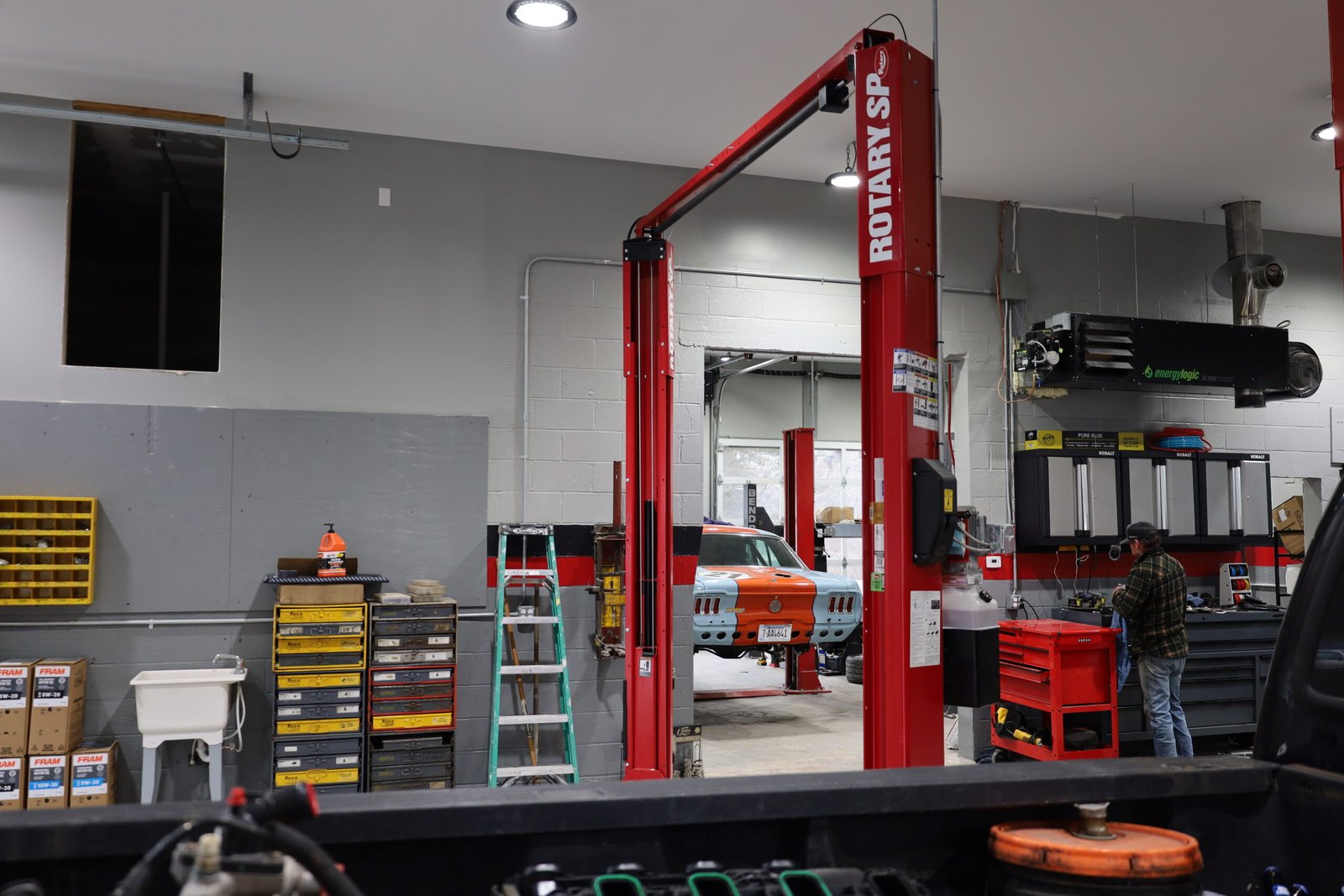
Wheel Balancing in Pine Plains, NY
Wheel balancing in Pine Plains, NY for speed-related steering-wheel shake, seat vibration, lost weights, and wheel-and-tire assemblies that do not rotate smoothly.
Book ServiceHow Wheel Balancing works
Balancing corrects small differences in wheel-and-tire mass so the assembly can rotate smoothly at speed.
Static imbalance tends to create an up-and-down force, while dynamic imbalance can create side-to-side wobble. Modern balancing equipment measures the assembly at speed and identifies corrective weight locations on the inner and outer planes of the wheel.
Runout is different from imbalance: it describes how much the tire or wheel moves away from a true circle or straight plane. An assembly can achieve a low balance reading and still cause vibration if its shape, mounting, or structure is not sound.
Even a correctly shaped tire and wheel can have small differences in mass around the assembly. At road speed those differences create force that may be felt through the steering wheel, seat, or floor. A balancing machine identifies where corrective weight is needed.
Not every vibration is imbalance. A tire with separated internal structure, excessive runout, a bent wheel, hub contamination, worn suspension, or a driveline problem can produce a similar complaint and will not be repaired by adding more weights.
When does a vibration point toward balancing?
Imbalance often becomes noticeable within a particular speed range and may fade above or below it. A steering-wheel shake suggests a front influence, while movement through the seat or floor may suggest a rear assembly, though inspection is still needed.
Balance should be checked after new tire installation and when a weight is lost, a tire is remounted, or a speed-related vibration begins. A sudden change after a pothole also calls for a damage check.
Smooth rotation requires a sound tire and wheel
The machine result should be considered with visible condition and runout. A wheel can read balanced yet still wobble, and a damaged tire can require replacement even if weight brings the numerical imbalance close to zero.
Alignment concerns usually show up as pulling, an off-center wheel, or wear rather than a narrow speed-range shake. Talus Automotive can direct the complaint to balancing, alignment, or broader repair based on the evidence.
Why does my vehicle vibrate at highway speed?
- Steering-wheel shake at a particular speed range
- Seat or floor vibration on the highway
- Vibration after tire installation or an impact
- Vibration began immediately after tire installation, rotation, wheel removal, or a lost weight
- Shake changes with road speed but not directly with engine speed or selected gear
Common causes
- Weight loss or assembly imbalance
- Tire or wheel runout
- Bent wheel, tire damage, or debris inside the assembly
- Wheel not centered on the balancer or vehicle hub because of mounting contamination
- Tire variation, shifted belt, flat spotting, or excessive radial or lateral runout
How the problem is narrowed down
- Confirm the speed and location of the vibration
- Inspect the tire and wheel for damage
- Measure imbalance and runout on balancing equipment
- Inspect how the wheel centers and check mating surfaces before trusting a balance result
- Separate engine-speed, road-speed, braking, and load-dependent vibration patterns
What the service involves
- Correct the assembly with appropriate weights
- Recheck the machine result
- Identify conditions that balancing alone cannot correct
- Place weights where the wheel design and machine measurement require without damaging the finish
- Road-test at the complaint speed when safe and appropriate to confirm the result
Why choose Talus Automotive for Wheel Balancing
Talus Automotive evaluates the assembly before treating every shake as a balance-only problem. The Pine Plains shop explains whether corrective weight solved the condition or whether tire, wheel, hub, or mechanical damage needs a different response.
What delaying can change
Continued vibration can accelerate tire and suspension wear. A bent wheel or damaged tire needs more than added balance weight.

Frequently asked questions
Why does my steering wheel shake at highway speed?
A front tire or wheel imbalance is a common cause, but tire damage, runout, a bent wheel, hub fit, or worn steering and suspension parts can create similar movement.
Why does the seat vibrate while driving?
A rear wheel-and-tire imbalance may be felt through the seat or floor. Driveline, wheel-bearing, tire-damage, and road-surface influences should also be considered.
Do new tires need balancing?
Yes. A new tire and wheel should be balanced as an assembled unit because both contribute small mass differences, and mounting changes their relationship.
Can wheel balancing fix a bent wheel?
No. Weight can correct mass distribution but cannot straighten a bent wheel or remove excessive runout. The wheel's condition must be evaluated separately.
Can unbalanced tires cause damage?
Persistent imbalance can increase vibration and contribute to irregular tire wear or added stress on related components. The severity depends on the condition and how long it continues.
Is balancing the same as wheel alignment?
No. Balancing corrects mass around each rotating assembly; alignment measures and adjusts wheel angles relative to the vehicle. They address different symptoms.