
Headlight & Exterior Lighting in Pine Plains, NY
Headlight repair in Pine Plains, NY for failed bulbs, dim or flickering lamps, rapid turn signals, moisture, damaged housings, and lighting-control faults.
Book ServiceHow Headlight & Exterior Lighting works
Exterior lights support nighttime visibility and signal braking, turning, reversing, and vehicle position. Modern lamps may include modules, sensors, ballasts, or LED assemblies.
Halogen bulbs produce light from a heated filament, HID systems use a ballast and arc, and LEDs rely on semiconductor emitters and electronic drivers. Automatic lighting can also depend on ambient sensors, ride-height inputs, steering position, cameras, and body-control commands.
Lens optics and reflector condition direct the light into a controlled beam. Installing an incompatible light source can create glare or poor distribution even when it appears bright while viewed from directly in front.
Exterior lighting helps the driver see and communicates braking, turning, reversing, and vehicle position to everyone else. Depending on the vehicle, a lamp may use a replaceable bulb or an integrated LED, ballast, level sensor, module, and network command.
A dark lamp does not automatically prove the bulb is the only fault. Power, ground, sockets, fuses, relays, connectors, moisture, control modules, and damaged housings can all interrupt operation or shorten component life.
Lighting problems affect visibility and communication
Replace or diagnose a failed brake light, turn signal, headlight, or marker promptly. Intermittent flicker, rapidly flashing signals, unequal brightness, warnings, or condensation that does not clear also deserve attention.
Check lighting before night travel and seasonal weather. A headlamp that works but points incorrectly may still reduce useful vision or glare at other drivers, so aiming can be part of the service when the design allows adjustment.
Modern lamps may require circuit diagnosis
Basic testing confirms the failed function and checks the lamp, power, and ground. If those are intact, the next step may involve commands, modules, sensors, or communication rather than repeated bulb replacement.
Cloudy exterior lenses can reduce output even when the electrical system works. Headlight restoration is a related appearance-and-visibility service, but it cannot repair an internal electrical or optical failure.
Why is a headlight or exterior lamp not working?
- Lamp is dark, flickers, or differs in brightness
- Turn signal flashes rapidly
- Lighting warning or moisture inside a lamp
- Lamp operates after tapping the housing or changes when the trunk, hatch, or door moves
- Automatic or adaptive lighting warning appears even though the main light source still illuminates
Common causes
- Failed bulb, LED assembly, fuse, or relay
- Socket corrosion, wiring fault, or poor ground
- Water intrusion, module fault, or damaged lens
- Heat-damaged socket, loose terminal, poor seal, or incompatible replacement lamp
- Ride-height, aiming, steering, camera, module, or network input affecting advanced lighting
How the problem is narrowed down
- Confirm every affected lamp and function
- Inspect the bulb or assembly and test power and ground
- Check controls or modules when the basic circuit is intact
- Compare voltage and ground under load on the failed and working sides
- Inspect beam pattern and aim after confirming the electrical source works correctly
What the service involves
- Replace or repair the confirmed failed item
- Aim adjustable headlamps when required
- Verify all exterior lighting functions
- Avoid touching sensitive bulb glass and reinstall covers and seals correctly
- Check low beam, high beam, signals, hazards, brake, reverse, marker, and plate lamps as applicable
Why choose Talus Automotive for Headlight & Exterior Lighting
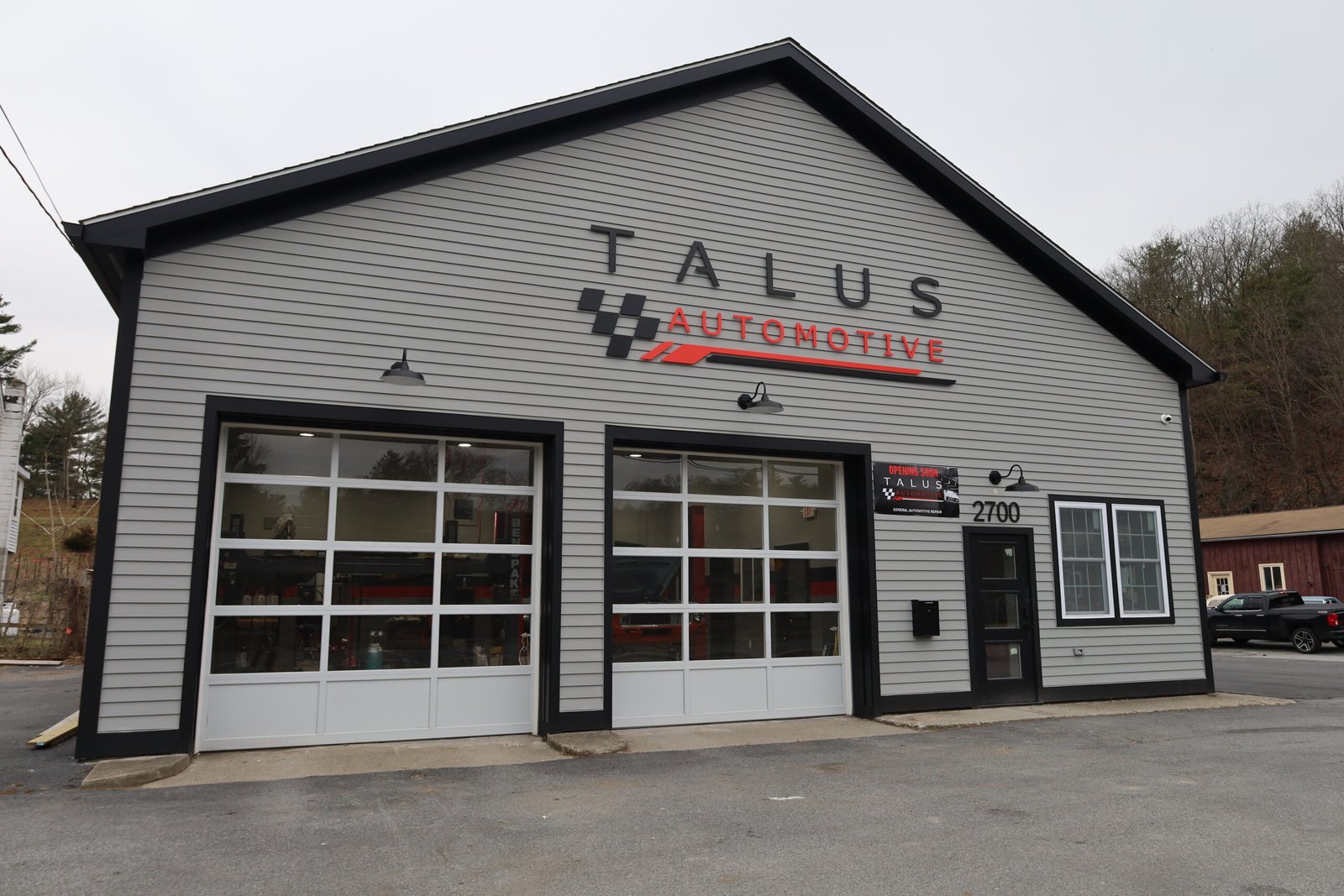
Talus Automotive checks the complete lighting function instead of stopping at the first bulb. The Pine Plains shop can distinguish a replaceable lamp from socket, wiring, moisture, aiming, or electronic-control concerns.
What delaying can change
Reduced visibility and missing signals increase crash risk and may violate vehicle-equipment requirements. Repeated bulb failure can indicate an electrical or sealing problem.
Frequently asked questions
Why does my headlight keep burning out?
Repeated failure can involve vibration, moisture, socket heat, charging voltage, poor connection, installation contamination, or the lamp assembly. The failed bulb may be a result rather than the cause.
Why is my turn signal blinking fast?
Rapid flashing commonly indicates that one lamp on that side is not drawing expected current. A failed bulb, LED, socket, wiring, or control fault can create it.
Why are my headlights dim?
Dim output can come from aged bulbs, hazy lenses, low voltage, poor grounds, reflector damage, aiming, or charging problems. Comparing both sides helps direct testing.
Is moisture inside a headlight normal?
A light temporary haze can occur with temperature change, but droplets, pooling water, or persistent condensation can indicate a vent or seal problem that threatens the lamp and electronics.
Can an LED headlight bulb be replaced?
Some designs use a replaceable LED source, while others integrate LEDs into the complete assembly. Vehicle design and fault location determine what can be serviced.
Can cloudy headlights be restored?
Exterior oxidation may be restorable when the housing, optics, seals, and internal surfaces are sound. Cracks, internal haze, failed reflectors, and electrical faults require a different solution.